
Love is work, and society has grown casual in its responses. Maybe it’s time to pause and consider how we can express our love for others in more tangible ways.

A Christian blog designed to encourage believers in their walk with Christ.
Love is work, and society has grown casual in its responses. Maybe it’s time to pause and consider how we can express our love for others in more tangible ways.

The 1828 Webster Dictionary defines groaning as: “a deep sound uttered in pain or sorrow.” There is nothing more profound than the groaning uttered in agony. It is earth-shattering. It draws from an emptiness that longs to be filled. Even tears will not relieve a heart that yearns for a resolution to our trials.

Our understanding of God’s full nature is limited because we cannot grasp the extent of His attributes; for example, His love is far more profound and sacrificial than we, as selfish beings, can ever grasp. God is the author of wisdom, and His mercy upon a generation that rejects Him is more gracious than anyone deserves. God asks us to pack our minds with these things, so they become part of how we think.
Vaudeville, 1903. The Milner Brewery Theater hosts an amateur talent show for local performers to compete for prizes. Every performance is cheered or booed. The last act of the night is long and drawn-out. Audience members shift in their seats waiting for the punchline, but the joke never lands. The theater owners try to get the performer’s attention, but he ignores them. Soon, the backstage crowd hisses at the entertainer to coerce him off stage. But to no avail: the act has gone rogue, and the participant refuses to give it up.
That evening, the theater’s owners, Harry C. Milner and his son, introduced the hook. From backstage, they inched the long pole toward the contestant, grasped his waist, and dragged him off stage. Since then, the vaudeville hook has become a standard prop and comedic trope for bad acts that have wandered off script.
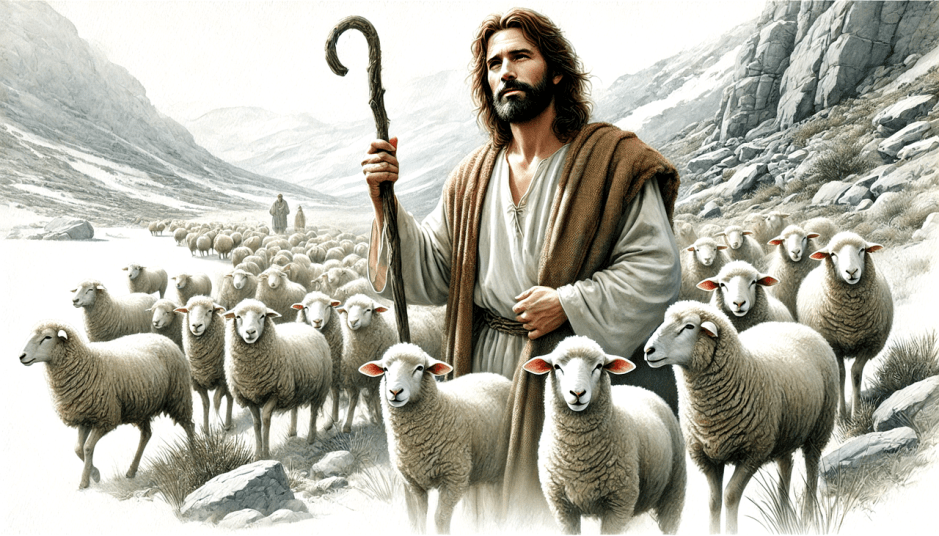
Although no one today would relate a hook with tenderness, guidance, or comfort, the well-known and loved Psalm 23 describes the great Shepherd’s staff (aka hook) as a tool to guide and direct his sheep away from harm. Psalm 23:4 says, “Even though I walk through the valley of the shadow of death, I fear no evil, for You are with me; Your rod and Your staff, they comfort me.”
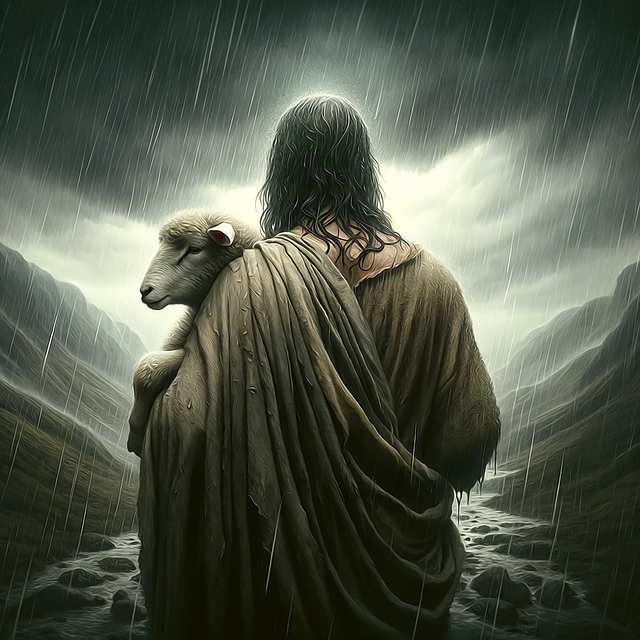
Like sheep, we wander, then find ourselves in danger from predators or unable to traverse the rough terrain. When trials pile up, we live independently from God and drift away from what sustains a healthy relationship with our Shepherd. The light that once lit our paths grows dim, and we lose our ability to think.
Yet, as the verse says, God walks with us in the dark valleys. He does not leave us to fend for ourselves, nor does he show us a shortcut past the pain. The Shepherd guides us through the rocky paths and sees us to the other side. In our weakness, however, we cannot see our suffering as the staff the Shepherd uses to show us our need for his guidance during these times.
David Gibson, in his book, The Lord of Psalm 23, says, “But what is my greatest enemy right now … It is my own sinful heart. My love of myself, my self-pity, my distorted belief that the grass might be greener somewhere else, or my deeply twisted, subtle belief that the path of righteousness might not be the path of happiness … Oh, how I need Christ’s staff in my life to continually pull me back to him.”
When darkness clouds your view of the Shepherd, fear not; He will find you and comfort you with His words. Ezekiel 34:11-12 says, “Behold, I Myself will seek My sheep and care for them. As a shepherd cares for his herd in the day when he is among his sheep which are spread out, so I will care for My sheep and will deliver them from all the places to which they were scattered on a cloudy day.”
Hang on to the Shepherd in the light and in the darkness. By this means, goodness and mercy will follow us if we allow His staff to direct our steps.

