
What these two men have in common is that they suffered for their faith and for the messages they proclaimed. They left a hole in their realm of influence. Leaving their supporters to question, “Who will lead us now?”

A Christian blog designed to encourage believers in their walk with Christ.
What these two men have in common is that they suffered for their faith and for the messages they proclaimed. They left a hole in their realm of influence. Leaving their supporters to question, “Who will lead us now?”

Granted, some will argue that you can distract your mind with music, movies, novels, etc., and that is true, but those things do not foster trust in the Author of the Bible. Memorizing scripture is more than meditation; it is an act of filling the well with God’s promises to draw from later.
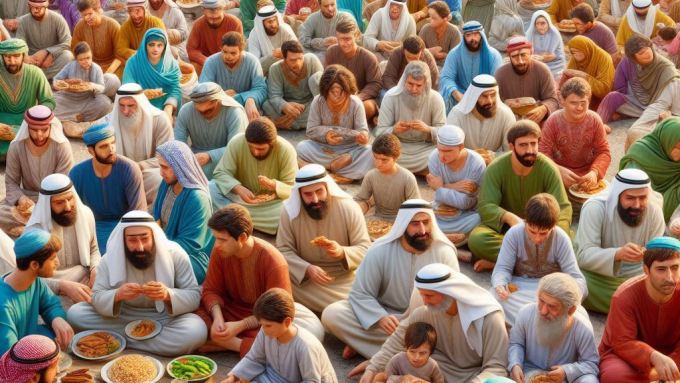
Jesus proved to the crowd that He would meet their physical needs, but what mattered most to Him was their spiritual blindness, which deterred them from seeing their Savior, who stood before them.

“I am full,” is a common phrase that rings out around the holiday table. Each participant sits, rubs their belly, and wonders where it all went. Yet, with what some call holiday magic, your dinner settles, and then there’s room for dessert. When your normal appetite returns, you realize that food is temporary and cannot satisfy your needs for long.
As Christians, we know that the only thing that satisfies our spiritual well-being is God. Ephesians 3:17-19 says, “so that Christ may dwell in your hearts through faith; and that you, being firmly rooted and grounded in love, may be able to comprehend with all the saints what is the breadth and length and height and depth, and to know the love of Christ which surpasses knowledge, that you may be filled up to all the fullness of God.”
In his sermon, “Experiencing the Power of Christ,” Pastor John MacArthur describes the fullness of God like this: “Now when it says you are filled up with the fullness of God, it doesn’t mean you become God. It simply means that the essence of who God is, in His glory, will fill your life. If I go down to the Pacific Ocean, take a little glass, and scoop up some of the ocean, it wouldn’t be proper to say that the entire Pacific Ocean is in my glass, because there’s much more. It is vast and vastly beyond my glass. All the ocean is not in my glass, but all that the ocean is is in my glass—its essence is contained there.”
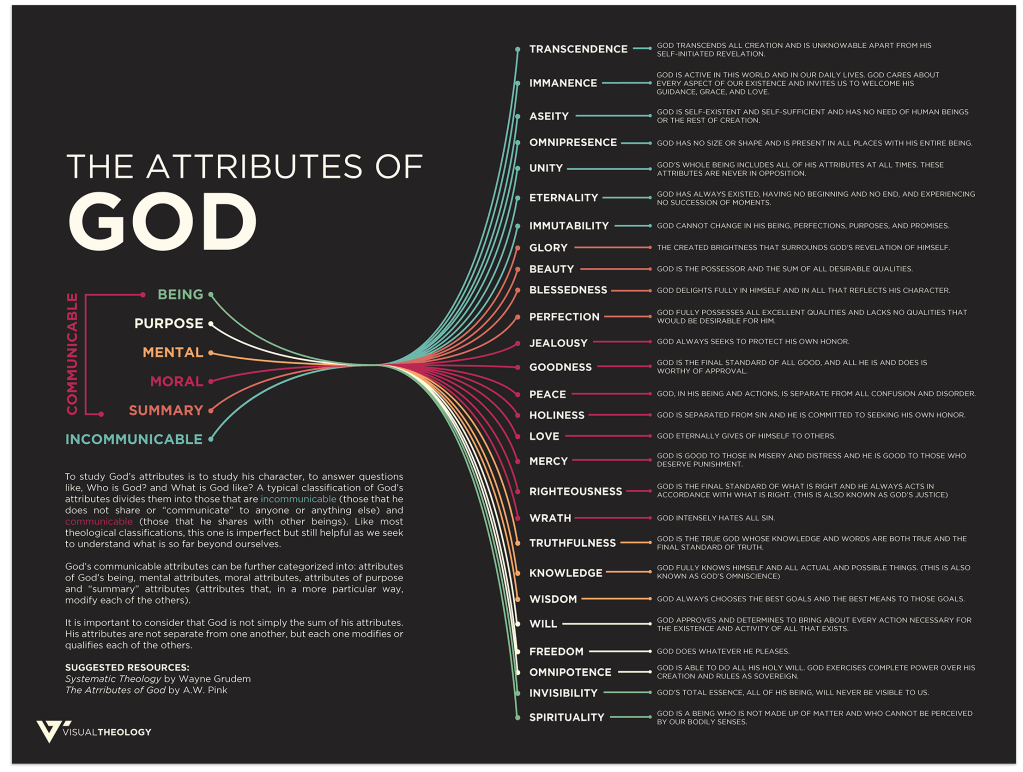
Our understanding of God’s full nature is limited because we cannot grasp the extent of His attributes; for example, His love is far more profound and sacrificial than we, as selfish beings, can ever grasp. God is the author of wisdom, and His mercy upon a generation that rejects Him is more gracious than anyone deserves. God asks us to pack our minds with these things, so they become part of how we think.
To be sure, immersing our minds in the knowledge of all that God is can be challenging. He understands and therefore provides wisdom. James 1:5 says, “But if any of you lacks wisdom, let him ask of God, who gives to all generously and without reproach, and it will be given to him.” He never establishes a standard that cannot be achieved through the work of the Holy Spirit. Like preparing a holiday dinner that takes days and hours, studying God’s character will take time, effort, and even sacrifice. However, the results penetrate your soul and transform your character.
C. S. Lewis’s The Screwtape Letters best describes God’s desire to fill Christians with Himself. In this passage, the uncle writes the following to his nephew, “One must face the fact that all the talk about His [God’s] love for men, and His service being perfect freedom, is not (as one would gladly believe) mere propaganda, but an appalling truth. He really wants to fill the universe with a lot of loathsome little replicas of Himself—creatures whose life, on its miniature scale, will be qualitatively like His own, not because He has absorbed them but because their wills freely conform to His” (HarperCollins Pub., 1996, p. 38).
 A Tree Firmly Planted